WTI Crude Crosses $67 on Weekend Geopolitical Risk

WTI crude has pushed above $67, setting the stage for what could be a highly eventful stretch for energy markets. Geopolitical tensions between the U.S. and Iran continue to escalate, while seasonal tailwinds begin to build as spring approaches. Together, these dynamics are reshaping the near-term outlook for crude prices.
From a technical perspective, WTI has been carving out a constructive pattern of higher highs and higher lows. Prices are now testing a key resistance level near $67, an area that could determine the next directional move. A sustained breakout would reinforce bullish momentum, while failure at this level could ignite consolidation.
However, attention now shifts to this weekend’s OPEC meeting. Any renewed push by the group to increase production quotas over the next two months could introduce downside pressure across the energy complex. While fears of a global inventory glut have yet to materialize, an acceleration in supply growth could quickly shift sentiment, particularly if demand expectations soften.
Logistics risks remain a major driver. The potential for disruption in the Strait of Hormuz — which accounts for roughly 20% of global “oil-on-water” flows, particularly into the Asia-Pacific region — continues to support a geopolitical risk premium. Insurance costs for tankers operating in the region have climbed, adding another layer of upward pressure on crude prices.
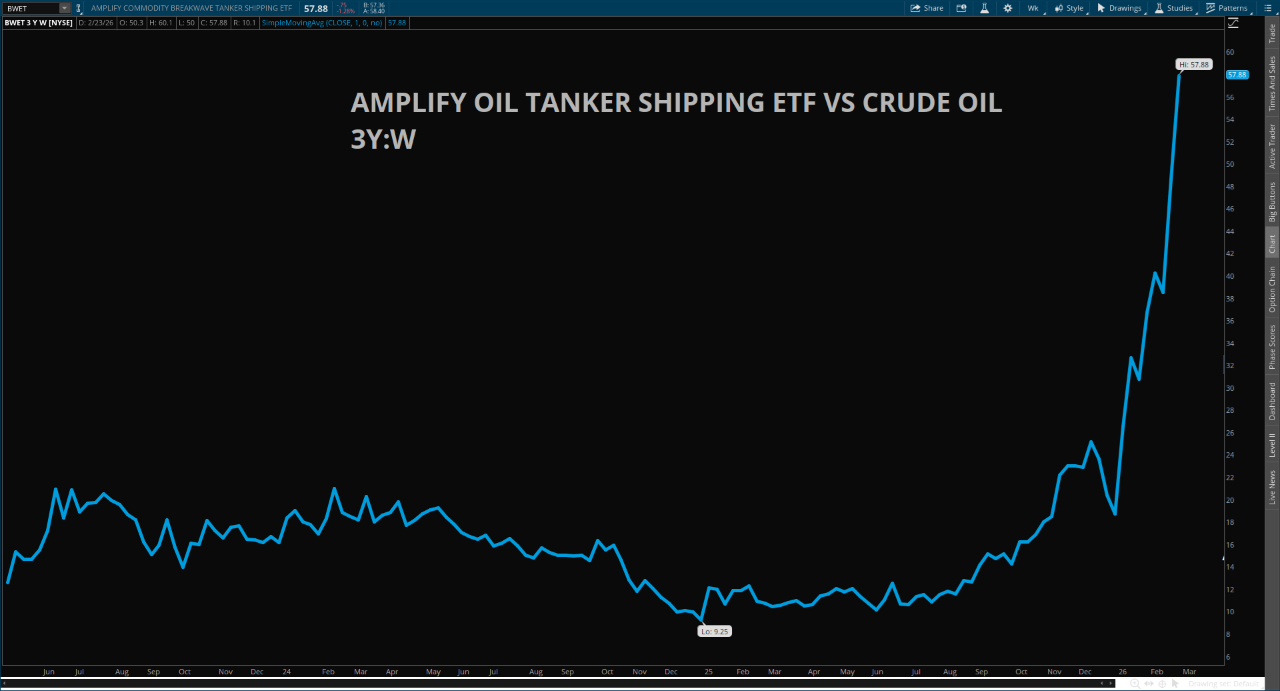
Importantly, geopolitics is not the sole catalyst. Tanker rates continue to reach new highs, as measured by the Breakwave Tanker Shipping ETF (BWET), which tracks crude oil tanker freight rates. Elevated shipping costs reflect tightening transport dynamics and reinforce the physical market’s underlying strength.
At the same time, a potential resolution between Ukraine and Russia could temper some of this risk premium. Reduced attacks on Russian energy infrastructure would ease supply chain concerns and may counterbalance fears of broader Middle East escalation.
Crude oil sits at a critical inflection point. Technical momentum, seasonal demand trends, and rising freight costs are supporting prices, but policy decisions from OPEC and evolving geopolitical developments could quickly alter the balance. With WTI pressing against major resistance, the coming weeks may determine whether oil extends its breakout — or pulls back as supply expectations begin to shift.
Featured Clips
New York Giants Quarterback Talks IPO Success & 'Not Forgetting the Moment'
Morning Movers
► Play video