Kevin Green
Sr. Markets CorrespondentU.S.-China Relations in Focus This Week
Kevin Green
Sr. Markets CorrespondentWith the Fed meeting behind us and a relatively light week in terms of major economic data, the market will shift its focus toward international relations with one of the largest economies in the world: China.
U.S.-China relations have been relatively tense throughout President Donald Trump's second administration, as the tariff and trade war that kicked off his second term has left some scarring when it comes to global trade. But this week, the market may see some relief on that front, and potentially some favorable outcomes that could shape the trajectory for sectors like tech and industrials.
Not lost in the background, the Middle East conflict will also be a topic of discussion all week, as the UN General Assembly meets in New York and Iranian President Masoud Pezeshkian is expected to address the Assembly Wednesday. Could economic dealmaking with China and progress on the Middle East conflict overlap in a way that eases tensions across the board?
Taken together, this week presents a rare convergence of catalysts: a lighter U.S. data calendar, a high-stakes Trump-Xi meeting, and parallel diplomatic activity at the UN on the Middle East.
With so much resting on face-to-face diplomacy rather than hard data, headline risk is likely to be the dominant market driver this week.
Weekend Meetings with China Set Stage
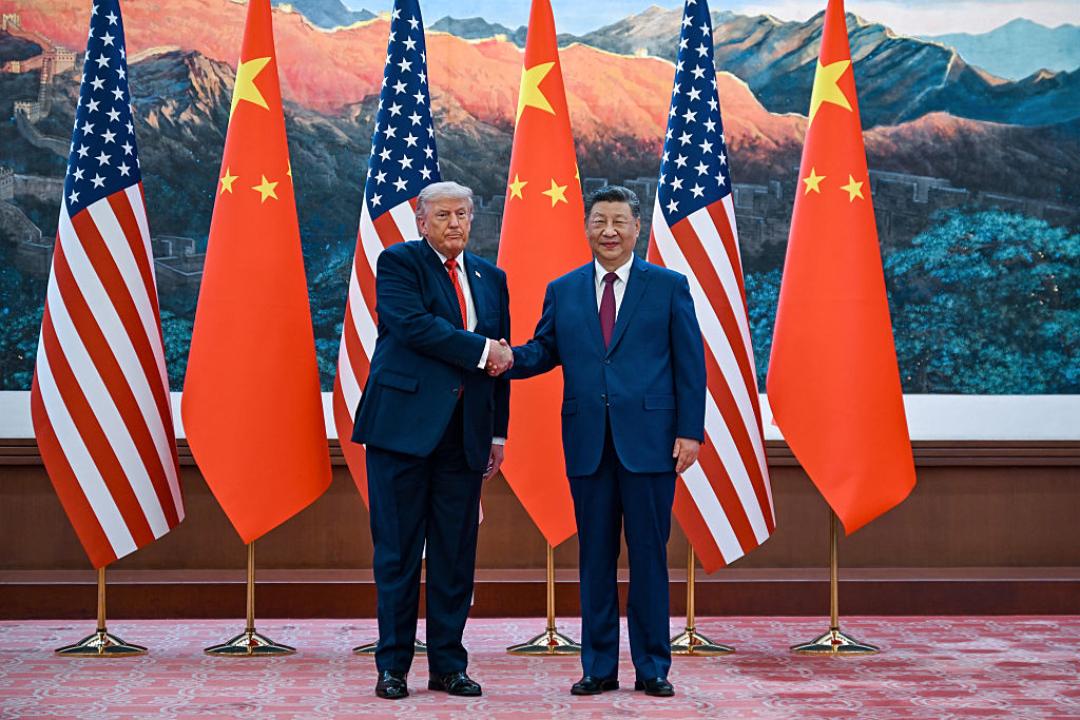
Before President Trump and Chinese President Xi Jinping meet formally on Thursday to discuss a wide range of matters, U.S. Treasury Secretary Scott Bessent met with China's Vice Premier over the weekend to set the stage for the week and tee up areas of agreement ahead of the two leaders' meeting. Bessent said Sunday that he "had a very successful engagement with the Chinese on trade and AI." He also suggested that an AI safety notification mechanism could be put in place to ensure national security concerns around AI.
U.S. Trade Representative Greer stated over the weekend that the U.S. and China have “operationalized a board of trade” — in other words, the two trade teams are making strides on crafting a deal that could reduce tariffs and trade barriers. On China's side, the focus is on consumer goods and low-tech items; on the U.S. side, the focus is on energy products, agricultural goods, and potentially some medical devices.
From a market perspective, this week may offer a breath of fresh air after months spent focused on escalating tensions in the Middle East, rising global energy prices, and central bank policy aimed at combating resurgent inflation. The AI story between the two countries is self-explanatory, but other sectors — like industrials — may see a boost in sentiment if reduced tariffs lower input costs for large China-exposed industrial names like Boeing (BA), Caterpillar (CAT), and RTX Corp (RTX). The same goes for consumer staples like Walmart (WMT) and Target (TGT), both of which have seen margins pressured by the trade war. See John Lonski on 'Unfazed' U.S. Consumer Behind Fed's Interest Rate Hike
If the Bessent-Greer groundwork translates into concrete tariff relief or a durable AI communication framework, markets could be sensitive to China-exposed industrials, consumer staples, and tech names with improved sentiment, even if formal agreements remain preliminary. Conversely, any sign that the Thursday meeting falls short of expectations, or that Middle East tensions resurface at the UN, could quickly reverse this week's cautiously optimistic tone.
Featured Clips
Iran & China at Forefront of Trading Week, Critical Metals Rally & NVO Slides
Morning Movers
► Play video